Nigeria’s Economic Outlook 2025: Naira Stability, Inflation Trends, and Investor Opportunities


The Nigerian financial landscape in 2025 has been defined by a series of bold reforms, market adjustments, and a slow but steady journey toward economic recovery. For followers of dollartonaira.com, understanding these shifts is crucial for making informed decisions regarding currency exchange, investments, and personal budgeting. As we approach the end of the year, we take a deep dive into the key financial news and indicators that shaped the Nigerian economy this year.
1. The Naira’s Performance: A Year of Convergence
One of the biggest financial stories of 2025 has been the Central Bank of Nigeria’s (CBN) success in narrowing the gap between the official NAFEM window and the parallel (black) market.
Early in the year, the volatility was high, but due to consistent liquidity injections and the clearing of valid foreign exchange backlogs, the Naira has found a “new normal.” Currently, the exchange rate hovers around ₦1,450 to ₦1,490, a significant achievement compared to the wild fluctuations seen in previous years. This convergence is vital because it discourages arbitrage and encourages foreign direct investment (FDI).
2. The Battle Against Inflation: Is the Peak Over?
Inflation has been the biggest challenge for the Nigerian consumer. However, recent data from the National Bureau of Statistics (NBS) shows a cooling trend. From a record high, headline inflation has dropped to 14.45% in late 2025.
Factors Driving Disinflation:
- Monetary Tightening: The CBN maintained a high Monetary Policy Rate (MPR) throughout the year to mop up excess liquidity.
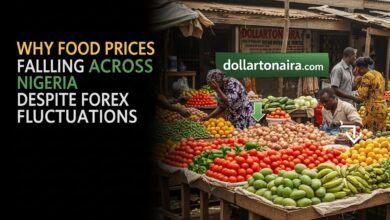
- Improved Food Supply: Strategic interventions in the agricultural sector and better security in farming belts have started to stabilize food prices.
- Energy Costs: While fuel prices remains a concern, the full operational capacity of local refineries like the Dangote Refinery has reduced the pressure of importing refined petroleum products with scarce Dollars.
3. CBN Policy Updates and Banking Reforms
The Central Bank has remained proactive in 2025. One of the most recent directives includes the mandatory recapitalization of Nigerian banks. This move is designed to create “trillion-dollar economy” capable banks that can support large-scale infrastructure projects.
Furthermore, the CBN has introduced stricter guidelines on International Money Transfer Operators (IMTOs), ensuring that remittances from the diaspora are channeled through official routes. This has boosted the country’s foreign reserves, which now stand at a healthy $45.2 billion.
4. The World Bank and IMF Perspective
International financial institutions have turned “cautiously optimistic” about Nigeria. In December 2025, the World Bank approved a $500 million credit facility specifically for the FINCLUDE Project. This initiative aims to increase financial inclusion for small businesses in rural areas, providing them with digital tools and low-interest credit.
The IMF has also praised Nigeria’s fiscal discipline, noting that the removal of the electricity subsidy and the floating of the Naira—while painful in the short term—are necessary steps for long-term growth.
5. Stock Market and Fixed Income Opportunities
The Nigerian Exchange (NGX) has remained one of the best-performing markets in Africa this year. The banking and industrial sectors have led the gains. For conservative investors, Treasury Bills and FGN Savings Bonds have offered attractive double-digit yields, making them a safer alternative to the volatile crypto market.
6. What This Means for You: Dollartonaira.com Analysis
As a user of dollartonaira.com, these macroeconomic trends directly affect your purchasing power. When inflation drops, your Naira goes further. When the exchange rate stabilizes, businesses can plan better without fear of sudden price hikes.
Key Advice for Year-End:
- Monitor Official Rates: Use our currency tools to track the official vs. black market rates before making large transactions.
- Diversify Your Portfolio: Don’t just hold cash. Consider agriculture-backed investments or fixed-income securities.
- Stay Informed: Financial news changes rapidly. The policies of today are the market realities of tomorrow.
1. Why is the Naira stabilizing at the end of 2025?
The stabilization of the Naira is largely due to the Central Bank of Nigeria’s (CBN) consistent intervention in the foreign exchange market and the clearing of long-standing FX backlogs. Additionally, increased crude oil production and higher foreign reserves have provided the necessary buffer to support the local currency.
2. Is now a good time to buy Dollars in Nigeria?
As of December 2025, the market is showing signs of convergence. While we do not provide direct financial advice, many experts suggest that stability is a good sign for business planning. Always monitor the real-time rates on dollartonaira.com before making large transactions to ensure you are getting the best market value.
3. How does the dropping inflation rate affect the price of goods?
A drop in inflation (disinflation) does not necessarily mean prices are falling; it means they are rising at a slower pace. However, as the inflation rate hits the 14% mark, consumers should start seeing more stability in the prices of locally produced agricultural products and essential services.
4. What is the impact of the Dangote Refinery on the exchange rate?
The full operational capacity of local refineries has significantly reduced the demand for Dollars to import refined petroleum products. By refining locally, Nigeria saves billions of Dollars annually, which reduces the pressure on the Naira and helps maintain exchange rate stability.
5. How can I protect my savings from currency devaluation?
Diversification is key. Many Nigerians protect their wealth by investing in a mix of assets, including fixed-income securities (like Treasury Bills), real estate, and high-yield savings accounts. Keeping an eye on global commodity prices like gold on our platform can also provide insights into alternative investment hedges.